
- Arts & Culture
- Community
- Q&A
Writing Syria: History as a Form of ‘Resistance’
Alia Malek, author of “The Home That Was Our Country” speaks to Syria Deeply about the process of rediscovering parts of Syrian history that have long been lost or erased.
Dear Deeply Readers,
Welcome to the archives of Syria Deeply. While we paused regular publication of the site on May 15, 2018, and transitioned some of our coverage to Peacebuilding Deeply, we are happy to serve as an ongoing public resource on the Syrian conflict. We hope you’ll enjoy the reporting and analysis that was produced by our dedicated community of editors contributors.
We continue to produce events and special projects while we explore where the on-site journalism goes next. If you’d like to reach us with feedback or ideas for collaboration you can do so at [email protected].
Exploring the Syrian war through the country’s arts and culture scene.
Follow via RSS
Alia Malek, author of “The Home That Was Our Country” speaks to Syria Deeply about the process of rediscovering parts of Syrian history that have long been lost or erased.

Wendy Pearlman, author of “We Crossed a Bridge and It Trembled,” speaks to Syria Deeply about how the conflict changed the way displaced Syrians tell their stories, and the shift from hope to disillusionment and eventually despair.

Syrian women at home and abroad are leading efforts to safeguard Syria’s cultural heritage and ensure that traditions are preserved in the wake of years of conflict and widespread displacement.

In 19-year-old Syrian medical student Nabeel Kallas’s upcoming novel “When the Jasmine Returns,” a group of young friends in Damascus strive to maintain a sense of normalcy against the backdrop of the Syrian conflict.

In this installment of ‘Pixels of War,’ our series on Syrian photographers, Faris al-Khattab discusses his view of Damascus from a besieged village in the south of the capital and a looming reconciliation deal in the area.

Franco-Syrian photographer Ammar Abd Rabbo discusses his experience covering two Assad presidencies and how his work changed when the Syrian war started.

Syria’s famed Ramadan TV dramas have slowly started to reappear in recent years, with the plot-lines increasingly focused on the war. This year, however, many of the productions were postponed, halted or went unsold and did not air during the holy month.

Teachers and volunteers in a rural Daraa town are braving bullets and airstrikes to rescue books from beneath the wreckage and stock a new public library. Their aim is to assist local students in the difficult task of finding resources in war-torn Syria.

In his new documentary, “Hell on Earth: The Fall of Syria and the Rise of ISIS,” filmmaker Nick Quested traces the geopolitical decisions that unwittingly contributed to the Syrian conflict and the rise of the so-called Islamic State.

The Syrian Female Journalists’ Network was founded to ensure better coverage of gender issues and better representation of women in newsrooms in the midst of the country’s protracted conflict. Milia Eidmouni tells News Deeply how they do it.

Recent mobile app games, comics and graphic novels are seeking to bring refugee voices to the fore through these new mediums for information-sharing and storytelling.

Historian and political analyst Sami Moubayed discusses his efforts to preserve the Syrian capital’s archives and cultural history and the war’s impact on the country’s many ancient sites and artifacts.

Filmmakers Sara Afshar and Nicola Cutcher spent two years interviewing survivors of Syrian detention centers and the families of detainees and defectors from the regime for their documentary “Syria’s Disappeared: The Case Against Assad.”

Oscar-nominated director Evgeny Afineevsky interviewed almost 100 people for his new documentary ‘Cries from Syria,’ which tells the history of the conflict through the stories of some of the conflict’s most ‘iconic’ personalities.

In the first installment of “Pixels of War,” our diary series on Syrian journalists, Artino describes his time as a war photographer, wanted by the regime, in besieged Eastern Ghouta.

Syrian artist Leila Said Hassou discusses the question that inspired her paintings in her first art exhibition in Turkey: What is at the root of extraordinary, sometimes incomprehensible, violence?

The Damascus International Book Fair is back in the Syrian capital. But the war has taken a severe toll on the cultural event, with pro-government political books, Iranian religious literature and self-care manuals now taking center stage.

When Reham Abo al-Nojoom fled Syria, she had to abandon her life as an artist. Now, in collaboration with German sculptor Astrid Hilt, she uses her works to serve as a “cultural ambassador” for the home she left behind.

Asem Hasna, from Syria, learned about do-it-yourself technologies after losing a leg in the conflict. Now living in Germany, where he has sought asylum, he wants to pass on the “science of the future” to refugee children.
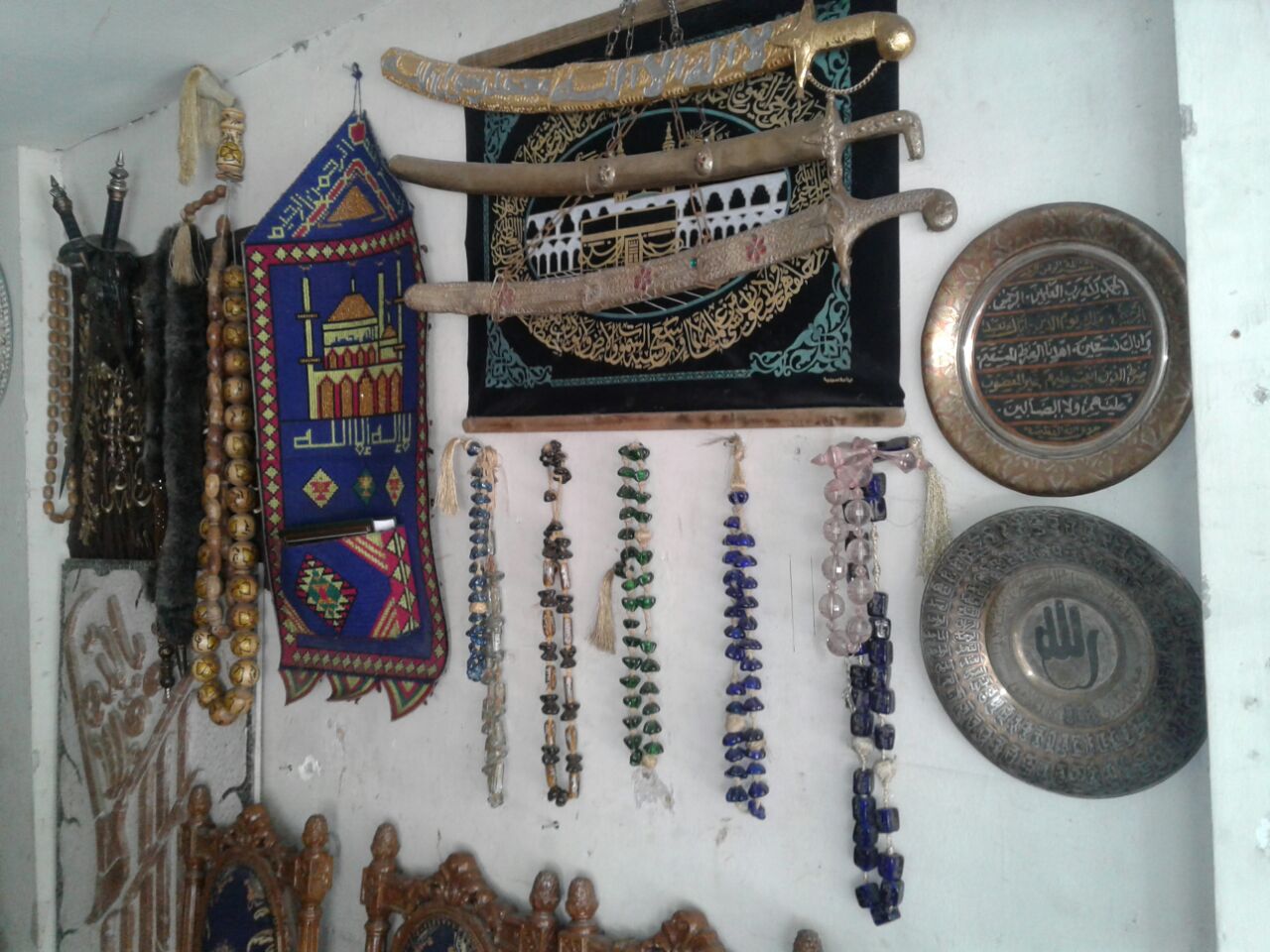
As part of our effort to highlight civilian stories, Syria Deeply spoke to Abu Abdo, an antique shop owner in Eastern Ghouta, one of the heaviest-hit areas in the war-ravaged country, who has kept his business open in the face of the utmost adversity.

Following refugee families and an aid worker fighting to keep the camp running, a new film produced by two young filmmakers and backed by Daily Show star Jon Stewart allows viewers to experience what it is like to live in Zaatari, the largest camp for Syrian refugees.

Damascene director and actress Nalia al-Atrash talks about the challenges of dissidence and censorship under Assad, the changing role of theater throughout the Syrian conflict, and coming to terms with a life in exile.

Syria Deeply looks back at some of the history and evolution of the country’s revolutionary art over the past five years of war, including political graffiti, digital art and other mediums that have become part of the language and culture of the uprising.

Cloud seeding is an important tool that’s been used in California to boost the mountain snowpack. It’s often done by aircraft flying in dangerous storm conditions. Now drones are poised to take over some of that work, possibly alleviating some of the risk and saving money.

Green rooftops are popping up across Damascus in neighborhoods under government siege. With no sign of the blockade letting up and no available agricultural land, residents in the rebel-held areas of the capital are making use of open roofs, sunlight and seeds to feed their families.

From war-torn homes to near permanent refugee status, Syrian children in Lebanon are living in a situation of never-ending insecurity, award-winning film-maker Mani Benchelah tells Syria Deeply. His film provides an intimate view into the lives of a generation whose world has been turned upside down.

Zaina Erhaim has taken the road less traveled. In London pursuing her M.A. when the revolution in Syria began, she chose to go against the stream of refugees fleeing the violence and return to use her skills as a journalist to help her country and her people.

Fourteen-year-old Muhammad Qteish spends weeks in his room in Syria’s war-torn city of Aleppo, gluing together small pieces of colored paper. Known around town as “the little architect,” Muhammad has spent months creating the new Aleppo, the Aleppo he hopes to help build once all the fighting is over.

This is the final post in our nine-part chronicle of one organization’s determination to bring hope and healing to Syrian refugees through innovative education.

Syria Deeply spoke to locals in Palmyra about what it means to them as ISIS tightens its grip on the historic city.

“The prices of gold, clothes and properties have soared. Wedding rings now cost what used to cover a year of apartment rent.”.

The songs we sang in the street were about immigration, the siege, and lack of water, so they actually mimic the reality these children are living.

“They managed to survive by sharing one meal a day, skipping a meal on some days. His children wake up in the middle of the night crying asking for food. Little children don’t know what a siege means.”.

Marah, a teenage girl from one of Syria’s besieged cities, shares her stories of life in the war. She recently moved to Damascus to continue her education, deciding to focus her college studies on prosthetics. She hopes to help heal the injured in her country’s conflict.

‘Studies show that common heritage helps foster compatibility between communities in the postwar phase’.

Zaytoun and Zaytouna uses such content as games, stories and illustrations to bring light relief and fun to children in a war zone.

Two artists spoke to Syria Deeply about how they have fought to keep creating work that is representative of Syria and its people.

‘The authorities have been trying for three years to reassure people that life can be normal in Tartous, but the truth is that conditions are declining’.

Before-and-after photos from the AAAS show the extent of damage to Syria’s World Heritage sites as a result of the war.

‘Whatever feelings we developed virtually don’t compare to actually meeting and talking face-to-face’.
Have a story idea? Interested in adding your voice to our growing community?
Learn more