
- Blue Economy
- Fisheries
- Community
- Q&A
How a Celebrity Chef Learned to Love Farmed and Frozen Fish
To feed a growing population, sustainable seafood advocate Ned Bell is encouraging fellow chefs and seafood consumers to look beyond ‘fresh’ and ‘wild.’
Dear Deeply Readers,
Welcome to the archives of Oceans Deeply. While we paused regular publication of the site on September 1, 2018, we are happy to serve as an ongoing public resource on ocean health and economy. We hope you’ll enjoy the reporting and analysis that was produced by our dedicated community of editors and contributors.
We continue to produce events and special projects while we explore where the on-site journalism goes next. If you’d like to reach us with feedback or ideas for collaboration you can do so at [email protected].
Exploring innovations and opportunities to a sustainable ocean economy.
Follow via RSS
To feed a growing population, sustainable seafood advocate Ned Bell is encouraging fellow chefs and seafood consumers to look beyond ‘fresh’ and ‘wild.’

Farmed Atlantic salmon don’t fare well in the wild. That’s a problem when they escape their pens and breed with vulnerable Atlantic salmon populations, spreading their genes. Scientists are now urging aquaculture companies to consider raising fish that won’t reproduce.

Mark J. Spalding President, The Ocean Foundation
Plastic production is expected to quadruple by 2050. Mark J. Spalding, president of The Ocean Foundation, explains how fully understanding the scope of the pollution problem convinced him that current efforts are not sufficient.

A growing wave of multinational corporations is pledging to stop handing out single-use plastic straws. Listen to Lonely Whale’s Dune Ives discuss the global momentum against disposable plastic and efforts to create a new ocean-friendly plastic supply chain.

Timothy Haab, a professor at Ohio State University, explains how and why putting a price tag on a beach’s value encourages policymakers to value natural capital.

As foreign-owned fishmeal factories proliferate in West Africa to supply feed for overseas aquaculture operations, prices for a key staple of the local diet are skyrocketing and Gambian fishers find it increasingly hard to compete against industrialized trawlers.

In a lab, researchers at the U.S. Department of Energy recently produced 5g of yellowcake from uranium collected from the ocean. Scientists hope to test the technology in the Gulf of Mexico next – but it is still far from being commercially viable.

Following Capitol Hill Ocean Week, Oceans Deeply’s Jessica Leber and Kristen Sarri of the National Marine Sanctuary Foundation discuss the ocean and coastal priorities of the Trump administration and Congress.

Fair trade doesn’t always mean fair transport, unions say, as the International Labour Organization debates a minimum wage increase for the shipping industry. Better treatment of workers could also have environmental benefits, they argue.

Researchers have found that the top layer of coral reefs prevents $4 billion in flood damage annually by breaking up waves that propel destructive storm surges. As storms increase in frequency and force, reefs play a crucial role in protecting coastal property.

Utila, a Honduran island in the Caribbean Sea, is transforming the plastic trash that washes up on its beaches into material used to build roads, an increasingly popular use for marine pollution.

Robert Parker at the University of British Columbia has calculated greenhouse gas emissions from the global fishing industry. He talks about what the data show and why not all fisheries are alike.

At the Ocean Risk Summit in Bermuda, experts gathered to advance a new model for how insurance and reinsurance companies can leverage their products and balance sheets to restore marine ecosystems and slow climate change impacts.

Researchers analyzed the environmental impacts of replacing land-raised meat with farmed seafood to feed a burgeoning population and found aquaculture could preserve nearly 750 million hectares. But there could be nutritional tradeoffs.

As the ocean’s pH drops, scientists are studying whether kelp and seagrass can create refuges that could help marine life survive acidifying waters.

Chip Cunliffe, director for sustainable development at XL Catlin, a global insurance and reinsurance group, explains why his company is hosting the first-ever Ocean Risk Summit in May and what it hopes to accomplish.
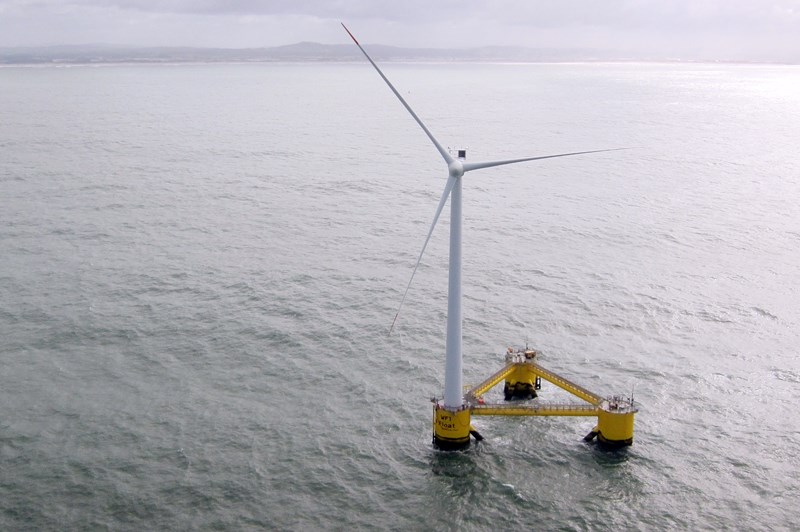
Matthew Marshall, executive director of the Redwood Coast Energy Authority, explains why a public-private partnership wants to build what could be the country’s first floating wind farm, in the Pacific Ocean.

Michael Roberts SEACAMS R&D Project Manager at the Centre for Applied Marine Sciences at Bangor University
Shipwrecks from both world wars are serving as models for research into how tidal and wave energy infrastructure will withstand marine conditions and potentially serve as artificial habitat.

Watamu is a popular tourist town that has had to organize a collective effort to keep its beaches and ocean clean. However, there are limits to what it can do about a global problem.

Aquaculture proponents view the ocean off Southern California as an ideal place for an emerging industry. The key, new research found, will be to carefully locate facilities to minimize environmental risks and conflicts with other marine uses.

In the latest installment of Deeply Talks, we discuss the world’s first insurance policy for a coral reef with experts at the Nature Conservancy. In Mexico, the policy will pay for coral reef restoration when destructive hurricanes strike.

After years of work to bring oysters back, the Chesapeake Bay Foundation found funding and interest harder to maintain, says scientist Chris Moore. So it helped form a new partnership that aims to plant 10 billion oysters by 2025 and grow a bigger oyster-farming industry.

Will the week’s sea ice be thin or thick or not there at all? New kinds of satellite data and better computer modeling will provide crucial information to Arctic Ocean communities and industries.

Famed Chinook salmon are getting smaller, according to a new study analyzing 40 years of data. The research feeds a debate over who or what is shrinking the salmon – people or other predators – and what it means for efforts to save both endangered fish and marine mammals.

With the average age of commercial fishers now over 50, the state is trying to figure out ways to break down barriers that are increasingly keeping young people from working the sea.

Thirty years of controversy has followed the transgenic technology that produces fast-growing fish but now it has finally arrived in Canada and could soon come to the United States. Will it live up to its claims of making seafood more sustainable?

Tropical coastal mangroves are increasingly found in the world’s temperate zones. Samantha Chapman, a biologist at Villanova University, explains how her research has documented their dramatic growth into Florida’s salt marsh turf and why that raises questions about the future of coastlines.

Scientists have attributed an algal bloom that killed off $800 million worth of salmon in Chile to rising ocean temperatures, and they say other aquaculture operations around the world are at risk.

As hacking risks grow and maritime operations become more digitally connected, experts in industry and government have long said no one is prepared. This summer was a wake-up call.

Most anchovies and herring commercially fished in California end up as fishmeal or bait, not on dinner plates. Now there’s a movement to get people to eat, not waste, small fish, and that could help preserve bigger species.

Researchers have developed a new way to test the effectiveness of immunotherapies by injecting enzymes from glowing deep-ocean crustaceans into cancer cells. But threats to the ocean from climate change and exploitation threaten marine life and its medicinal potential.

The state’s nascent seaweed industry is commercializing an ancient tradition, but concerns have been raised about the impact on indigenous kelp harvests.

Oceans Deeply talks with three experts in the fields of marine conservation, aquaculture and shipping about the big issues on their plate for the coming year.

With their greenhouse gas emissions rising and regulations looming, shipping companies that transport nearly all of the world’s goods are looking at renewable fuel sources to power container ships.

Even today, few people have ever traveled to the bottom of the ocean. Stockton Rush, chief executive of OceanGate, explains why he is designing a submersible that will take paying clients there on research missions.

Collecting tropical fish for the aquarium market is depleting wild populations and harming coral reefs. Conservationists are developing techniques to breed highly sought fish in captivity to spare their wild cousins.

Key negotiations will begin to protect biodiversity in two-thirds of the ocean and reduce greenhouse gas emissions from shipping. Meanwhile, watch for advances in sustainable aquaculture production both in the U.S. and globally.

The ocean may cover more than 70 percent of the planet, but it doesn’t get covered nearly enough in the news. Oceans Deeply launched in June to help fill that gap. Catch up on our coverage during a busy year for ocean health.

As momentum builds for an international treaty to protect high seas biodiversity, national leaders and business executives at the fourth Our Ocean conference vowed to take action to fight climate change, plastic pollution and other threats to marine ecosystems.

Dams, pollution and development have taken a toll on salmon populations in Washington State. Now researchers find that the lack of fish is causing pregnant orcas to miscarry, further imperiling the endangered killer whales.
Have a story idea? Interested in adding your voice to our growing community?
Learn more