
- Blue Economy
- Fisheries
- Community
- Q&A
How a Celebrity Chef Learned to Love Farmed and Frozen Fish
To feed a growing population, sustainable seafood advocate Ned Bell is encouraging fellow chefs and seafood consumers to look beyond ‘fresh’ and ‘wild.’
Dear Deeply Readers,
Welcome to the archives of Oceans Deeply. While we paused regular publication of the site on September 1, 2018, we are happy to serve as an ongoing public resource on ocean health and economy. We hope you’ll enjoy the reporting and analysis that was produced by our dedicated community of editors and contributors.
We continue to produce events and special projects while we explore where the on-site journalism goes next. If you’d like to reach us with feedback or ideas for collaboration you can do so at [email protected].
Read the latest commentary, Q&As and opinions from the Oceans Deeply community.
Follow via RSS
To feed a growing population, sustainable seafood advocate Ned Bell is encouraging fellow chefs and seafood consumers to look beyond ‘fresh’ and ‘wild.’

Carolyn Savoldelli, a research analyst for the World Resources Institute, explains her group’s effort to curate, decipher and connect a growing amount of open ocean data to aid scientists and policymakers.

Mark J. Spalding President, The Ocean Foundation
Plastic production is expected to quadruple by 2050. Mark J. Spalding, president of The Ocean Foundation, explains how fully understanding the scope of the pollution problem convinced him that current efforts are not sufficient.

Ann Bucklin
Despite the critical role marine zooplankton play in ocean ecosystems, scientists know little about the tiny species. Ann Bucklin, a professor of marine sciences at the University of Connecticut, describes how her laboratory is changing that.

A growing wave of multinational corporations is pledging to stop handing out single-use plastic straws. Listen to Lonely Whale’s Dune Ives discuss the global momentum against disposable plastic and efforts to create a new ocean-friendly plastic supply chain.

Timothy Haab, a professor at Ohio State University, explains how and why putting a price tag on a beach’s value encourages policymakers to value natural capital.
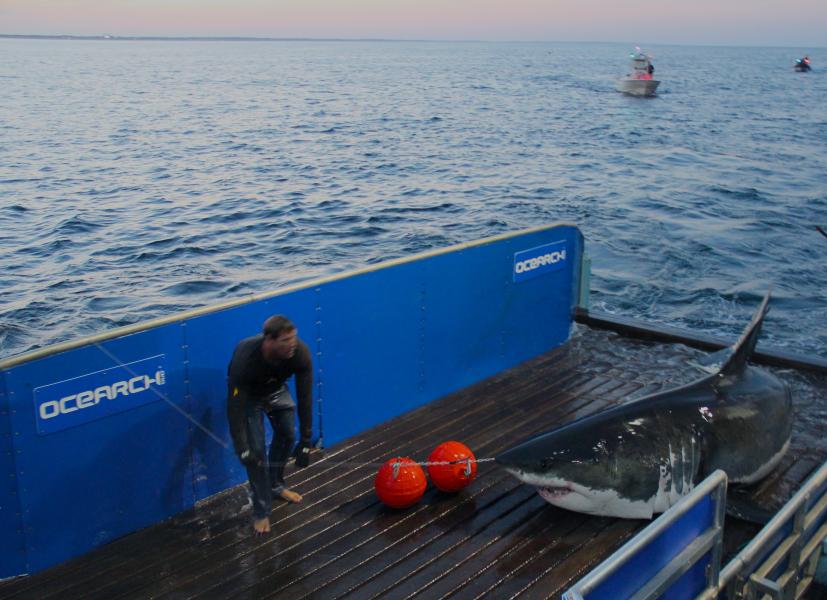
The combination of tagging and social media has helped both scientists and the public engage with the ocean’s most feared predator in new ways. Jim Ware, who has tweeted as Mary Lee – the world’s most famous shark since Jaws – tells Oceans Deeply about his experience.

Alistair Hobday Senior Principal Research Scientist, CSIRO Oceans and Atmosphere
Australian marine research scientist Alistair Hobday writes about why it’s important to start naming and classifying marine heatwaves as the phenomenon increasingly wreaks havoc on ocean ecosystems.

Sara Aminzadeh, executive director of California Coastkeeper Alliance and a member of the California Coastal Commission, says there’s momentum for ambitious ocean commitments to be made at the upcoming Global Climate Action Summit.

Paul Harvey Environmental Science Researcher, Australia’s Macquarie University
As governments around the world rightly consider bans of various kinds of disposable plastics, nuance is needed to protect crucial applications, such as in research, food aid and medicine, argues environmental science researcher Paul Harvey of Macquarie University.

Wave pools are opening far away from the coasts. Surfer and environmentalist Steve Hawk discusses his high hopes – and biggest fears – for the future of the technology and whether it will inspire more or less love of the ocean.

Heather Welch Researcher in Ecosystem Dynamics, University of California
Jennifer McHenry PhD Student, Florida State University
Marine mammals, sea turtles and other species don’t always stay within the boundaries of ocean reserves. Two scientists say marine preserves should be designed with enough flexibility to extend protections to where animals migrate.

The future of krill – and all the marine wildlife that feed on them – is uncertain in the changing Southern Ocean. Krill biologist Stephen Nicol says they may be adaptable to climate change, but new technologies need to be deployed to study their enigmatic behavior.

Whitley Saumweber Ocean Policy Consultant
Roberta Elias Deputy Director for Ocean Policy, World Wildlife Fund
We must reorient our ocean management to adapt to new climate realities, say Whitley Saumweber, former ocean and coastal adviser to President Obama, and Roberta Elias of the World Wildlife Fund.

Following Capitol Hill Ocean Week, Oceans Deeply’s Jessica Leber and Kristen Sarri of the National Marine Sanctuary Foundation discuss the ocean and coastal priorities of the Trump administration and Congress.

A coalition hopes to achieve a network of marine protected areas in the vast Southern Ocean by 2020. Earle argues that the health of the planet itself is at stake.

For World Oceans Day, we asked nonprofit leaders and scientists what they thought people could do to improve the health of oceans and coasts. Their advice ran the gamut.

Kimberley Davies Postdoctoral Research Associate, Dalhousie University
The need for new protections for North Atlantic right whales in Canada’s Gulf of St. Lawrence underscore these animals’ dire situation – and how little we still know about them.

A 2016 expedition near Bermuda found new species and biological communities thriving on the seabed relatively near shore. Alex Rogers, science director of the Nekton Oxford Deep Ocean Exploration Institute, says the discovery shows how little we know about marine life.

Oliver Knowles Senior Oceans Campaigner, Greenpeace International
The environmental group and the world’s biggest tuna producer are collaborating to improve working conditions and environmental practices. Now other seafood companies need to join a global effort to make tuna fishing sustainable.

Clara Mackenzie Postdoctoral Researcher at the Institute of Aquaculture, University of Stirling
Joanne Porter Associate Professor, Heriot-Watt University Orkney Campus
The scuttling of 52 German warships off Scotland nearly a century ago during World War I spawned a habitat for a diverse array of crab, lobster, starfish, sea urchin and fish. Now bottom trawling and climate change is imperiling that refuge, say two researchers.

Robert Parker at the University of British Columbia has calculated greenhouse gas emissions from the global fishing industry. He talks about what the data show and why not all fisheries are alike.

Projects to convert retired oil rigs into artificial reefs are controversial. But advocates and consultants Emily Callahan and Amber Jackson argue this practice provides valuable habitat at a time when natural coral reefs are disappearing.

Jefferson Keith Moore Professor of Earth System Science, University of California, Irvine
Over the next two centuries, warming oceans could trap nutrients at the poles and starve out many of the world’s fisheries, according to a recent study.

The Okeanos Expedition has returned from a 23-day exploration of the deep ocean in the Gulf of Mexico. Scientist Daniel Wagner says that much of what they saw was new to science and could affect management of the Gulf.

The collapse of Thwaites Glacier would unleash catastrophic sea level rise. Erin Pettit, one of more than 100 scientists involved with a new international collaboration, discusses how better ocean data will help predict the glacier’s – and humanity’s – fate.

Mars is mapped in better detail than the ocean floor, which is why a project on the scale of some space missions was launched to change that. Listen to experts discuss how Seabed 2030 will work and what it could mean for marine conservation.

Claire Nouvian, one of the winners of this year’s Goldman Environmental Prize, has successfully battled to protect marine life from destructive fishing practices.

Chip Cunliffe, director for sustainable development at XL Catlin, a global insurance and reinsurance group, explains why his company is hosting the first-ever Ocean Risk Summit in May and what it hopes to accomplish.
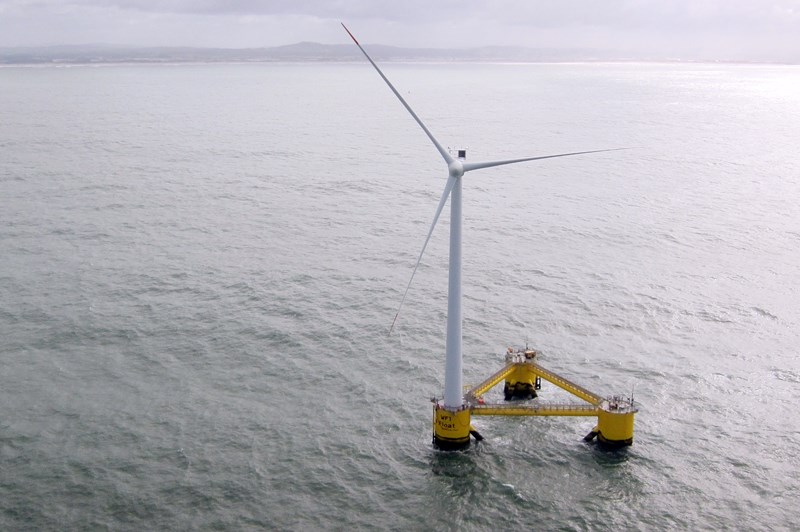
Matthew Marshall, executive director of the Redwood Coast Energy Authority, explains why a public-private partnership wants to build what could be the country’s first floating wind farm, in the Pacific Ocean.

Michael Roberts SEACAMS R&D Project Manager at the Centre for Applied Marine Sciences at Bangor University
Shipwrecks from both world wars are serving as models for research into how tidal and wave energy infrastructure will withstand marine conditions and potentially serve as artificial habitat.

Marine scientist Edward Allison says his research shows that in some developing countries, fish farming is not benefiting nutritionally vulnerable communities. That has triggered a backlash from other researchers and the aquaculture industry.

‘Aulani Wilhelm Senior Vice President, Center for Oceans at Conservation International
Coral reefs are vital marine ecosystems, but time is running out to protect them from climate change. The only way to stave off a coral catastrophe, says ‘Aulani Wilhelm of Conservation International, is to scale up marine protected areas – and fast.

Selina Ward Senior Lecturer in the School of Biological Sciences, University of Queensland
It’s not the first time bleaching has hit this area, but it is another indication that waters around Australia, and the world, are warming rapidly, says University of Queensland coral researcher Selina Ward.

In the latest installment of Deeply Talks, we discuss the world’s first insurance policy for a coral reef with experts at the Nature Conservancy. In Mexico, the policy will pay for coral reef restoration when destructive hurricanes strike.

After years of work to bring oysters back, the Chesapeake Bay Foundation found funding and interest harder to maintain, says scientist Chris Moore. So it helped form a new partnership that aims to plant 10 billion oysters by 2025 and grow a bigger oyster-farming industry.
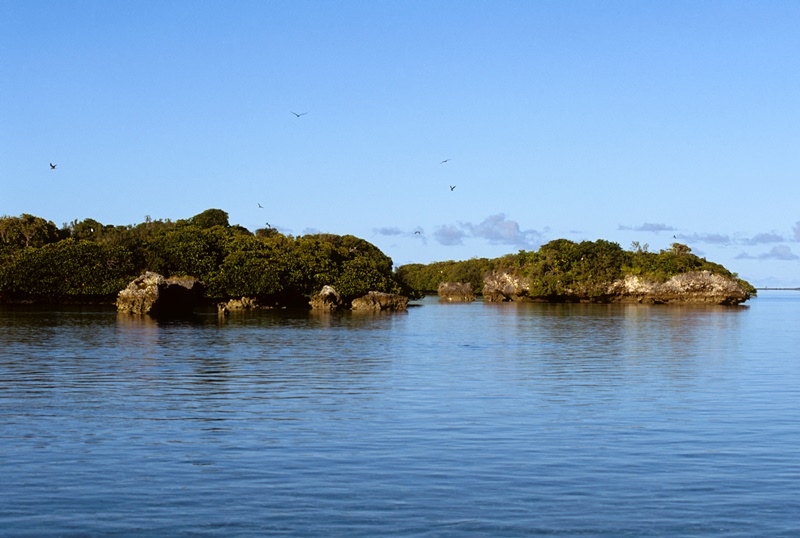
The Nature Conservancy’s Rob Weary explains how the group brokered an innovative financing deal that could serve as a model for ocean protection in island developing nations.

Sarah Cooley, a marine scientist at the Ocean Conservancy, explains the environmental group’s strategy for reaching out to both sides of the aisle on legislation to address ocean challenges in a divisive political environment.

Consumer products giant P&G is tackling marine pollution by creating bottles made from beach plastic and developing new technologies to reduce waste. P&G’s Virginie Helias talks about the importance of collaboration to solve the ocean plastic crisis.

Thai Union, one of the world’s largest seafood companies, is exploring if digital logs and satellite connectivity on fishing boats could help prevent human rights abuses and illegal fishing. Darian McBain, global director for sustainability, says results look promising.
Have a story idea? Interested in adding your voice to our growing community?
Learn more